Artemis II Flew Around the Moon. These Are the Photos the Crew Brought Back
- Artemis II launched on April 1, 2026, and splashed down on April 10 after a nearly 10-day trip around the Moon. It was the first crewed flight of NASA's Orion spacecraft.[1]
- At its farthest the crew was 252,756 miles from Earth, a new record for humans, beating Apollo 13's 1970 mark.[1]
- On October 7, 2026, NASA released more than 11,000 full-resolution images and videos, part of an 800-gigabyte lunar science dataset.[2]
NASA's Artemis II mission launched on April 1, 2026, from Launch Complex 39B at Kennedy Space Center in Florida, carrying four astronauts on a nearly 10-day voyage around the Moon.[1] The crew was NASA astronauts Reid Wiseman, Victor Glover and Christina Koch, with Jeremy Hansen of the Canadian Space Agency.[1] They splashed down in the Pacific Ocean off San Diego on April 10.[1]
A record distance
At their farthest point, the crew was 252,756 miles from Earth, the greatest distance humans have traveled in space, and the whole trip covered 694,481 miles.[1] NASA says the lunar flyby set a new human distance record, passing the one set by Apollo 13 in 1970.[1]
Earthset
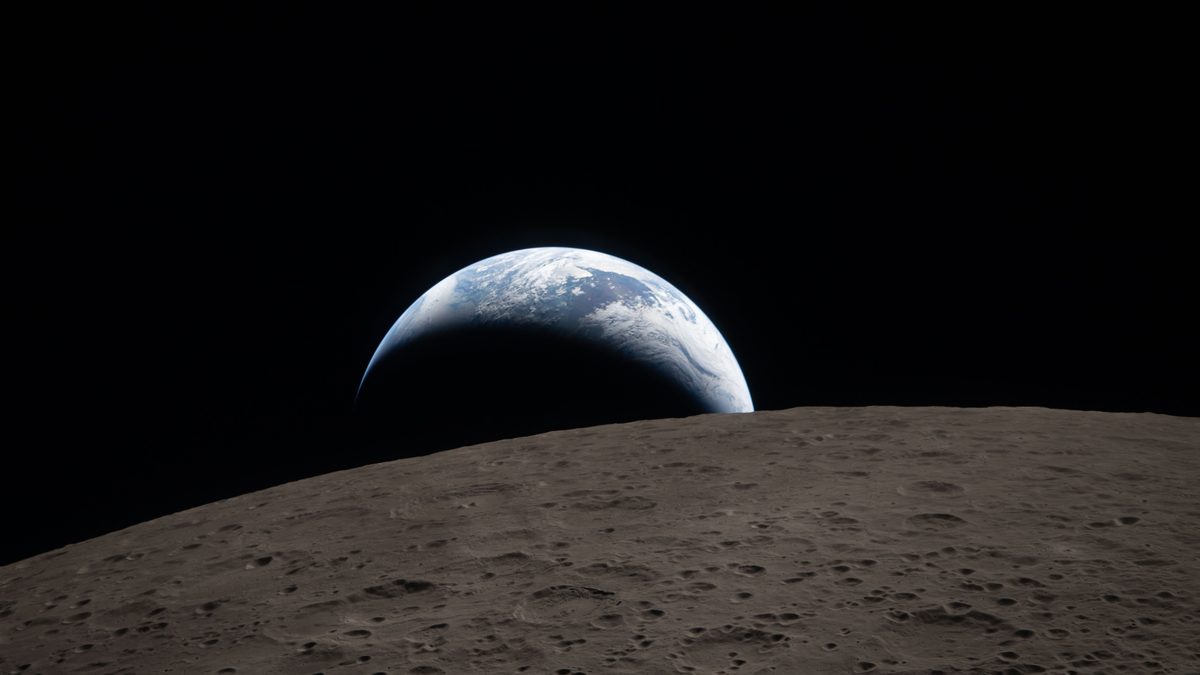
On flight day 6, the day of the lunar flyby, the crew passed behind the Moon's far side and photographed Earth dropping below the lunar horizon.[1] NASA says the picture echoes the famous Earthrise photo taken by the Apollo 8 astronauts in 1968.[1] The crew spent that day taking photographs, writing annotations and recording their scientific observations of the lunar surface, rotating roles as they worked.[2]
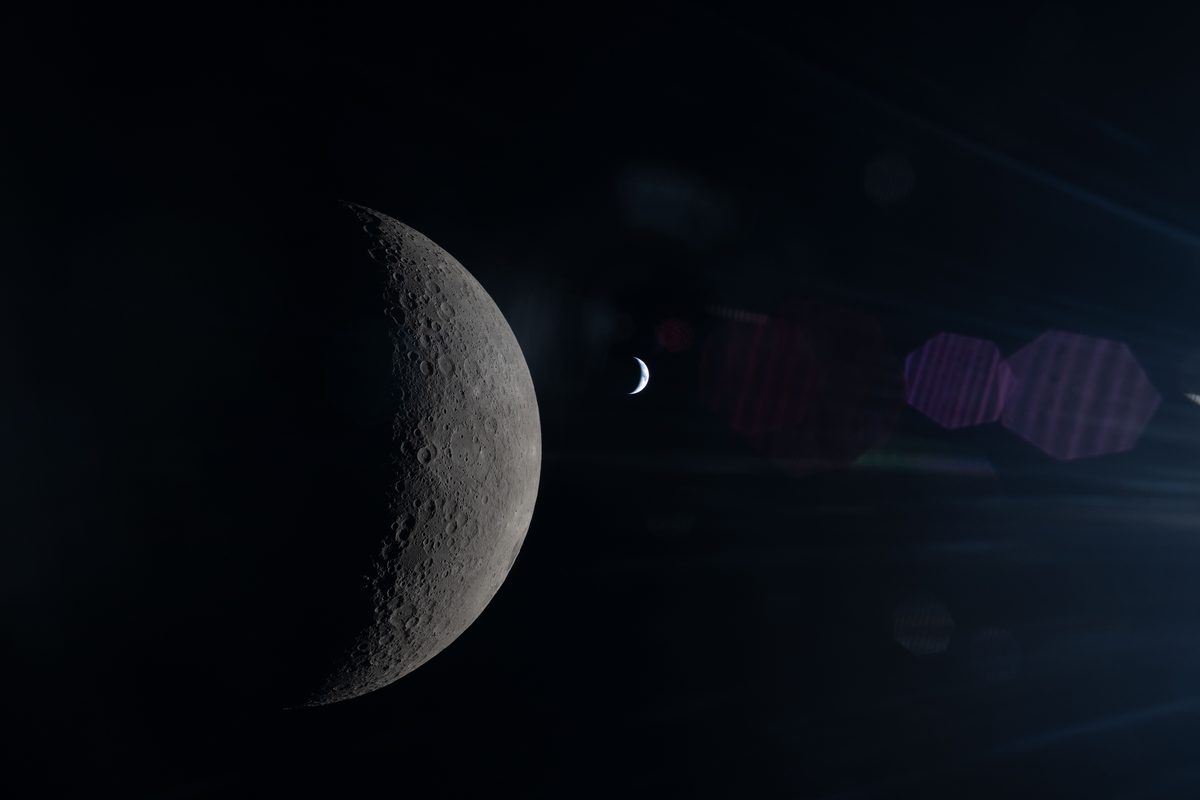
Two worlds, one Sun
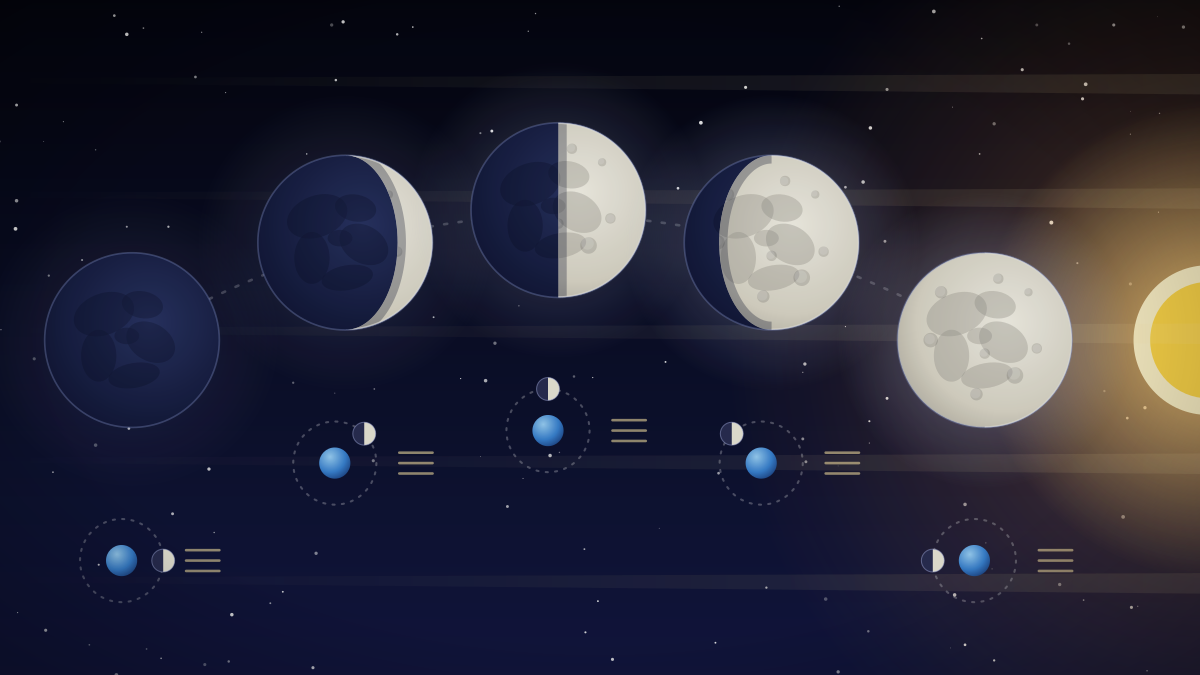
In another frame from behind the Moon, the half-lit Moon sits in the foreground with a much smaller crescent Earth to the right.[1] NASA points out that the two bodies have different phases but are shaped by the same sunlight.[1]
An eclipse from the Moon's side
NASA also released a photograph from April 6 showing the Moon backlit by the Sun during a solar eclipse as seen from Orion, with the spacecraft in the foreground at left.[1] Earth was reflecting sunlight onto the left edge of the Moon, which is slightly brighter than the rest of the disk.[1] NASA's caption identifies two planets in the picture: Saturn just below the Moon's bottom right edge, and Mars at the right edge of the frame.[1]
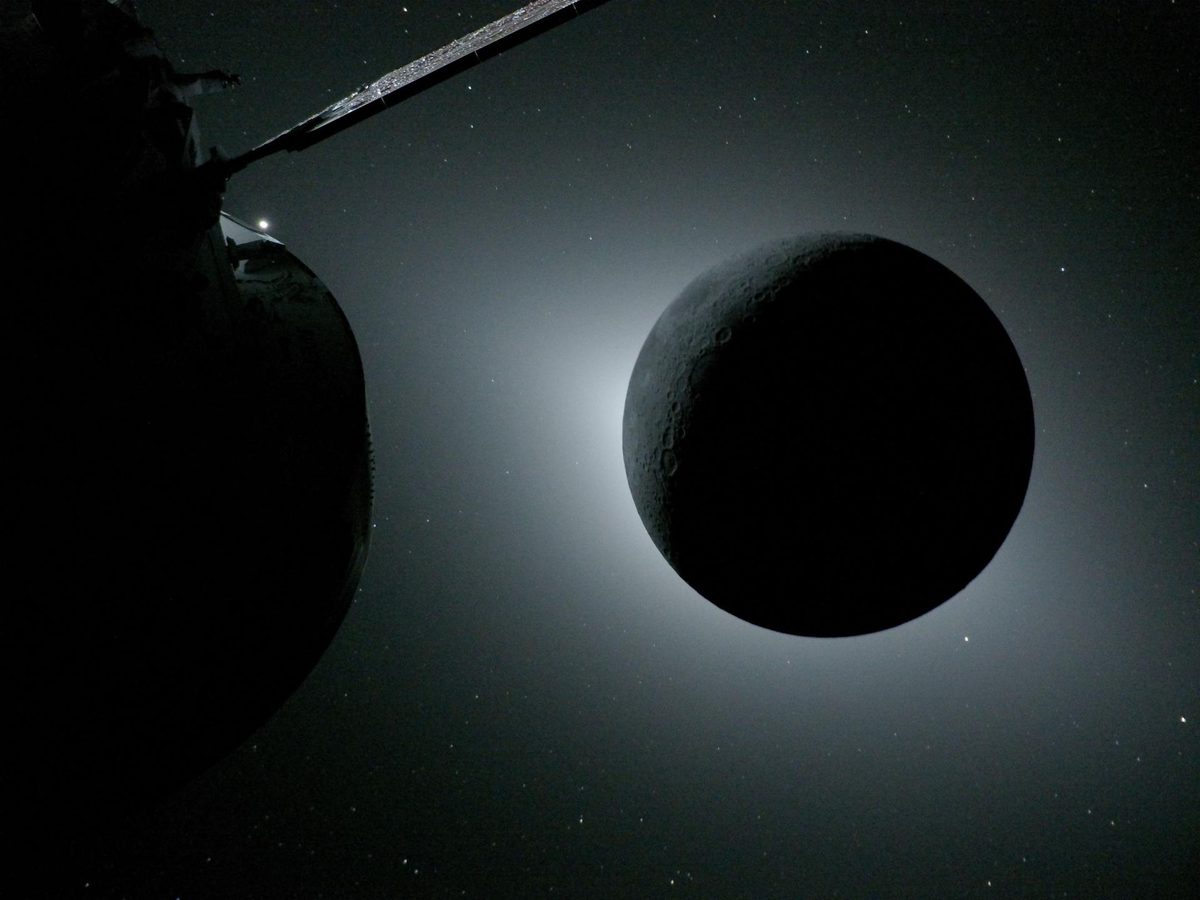
The crew watched this eclipse with the same kind of eclipse viewers NASA produced for the 2023 annular eclipse and the 2024 total eclipse, the first use of eclipse glasses at the Moon.[1] NASA also released a screenshot from a crew member's tablet on which three crew members had marked impact flashes and their locations on a picture of the dark Moon eclipsing the Sun.[2]
The Milky Way from deep space
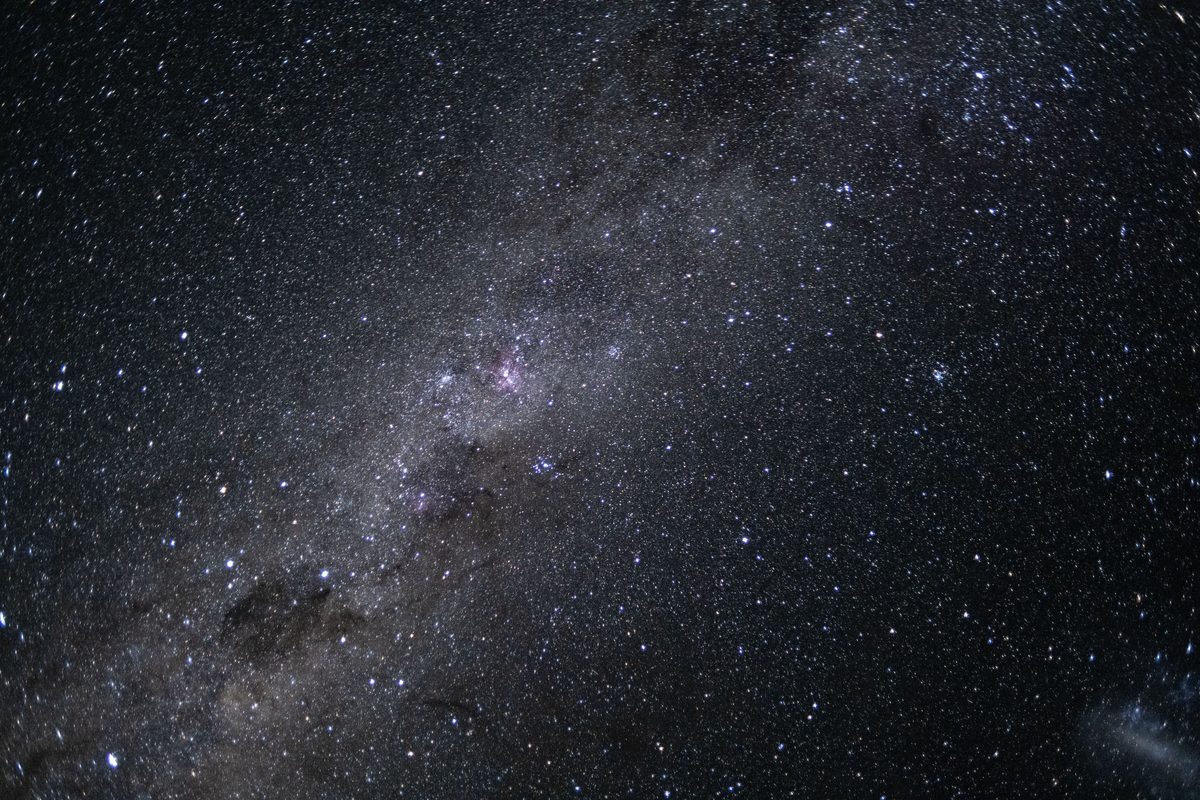
On flight day 7 the crew photographed the Milky Way.[1] NASA's caption says the galaxy's spiral structure is dominated by two arms wrapping off the ends of a central bar of stars, that it spans more than 100,000 light-years, and that Earth lies along one of the arms, about halfway from the center.[1]
More than pictures
On October 7, 2026, NASA made the full lunar science dataset from the mission available to scientists and the public.[2] It totals more than 800 gigabytes in NASA's Planetary Data System, including more than 11,000 full-resolution images and videos from the crew's handheld cameras and Orion's cameras, 8.5 hours of audio recordings of the crew's observations of the lunar surface, and images the crew annotated.[2] NASA describes it as the first planetary science dataset captured primarily by humans in more than half a century.[2]
NASA published three accompanying documents: a Preliminary Lunar Science Report, a Lunar Science Operations Report and a Lunar Science Data User Guide.[2] The agency says the information is already helping to inform plans for Artemis III and beyond.[2]
What Artemis is for
NASA says that under Artemis it will send astronauts on increasingly complex missions to explore the Moon for scientific discovery and economic benefit, and to prepare for future human missions to Mars.[1] One outcome NASA called unexpected was what it named "Moon joy," the emotional weight of seeing the Moon up close and returning humans to deep space.[1]
This article relies on NASA's own mission pages. Dates, distances and photo captions are as published by NASA. Photographs credited to NASA are used under the NASA Images and Media Usage Guidelines; NASA does not endorse this site.[3]
Sources3tap to view
- NASA (Sumer Loggins, Johnson Space Center). Artemis II Mission Milestones: An Image and Video Recap. April 21, 2026. Accessed October 23, 2026.
- NASA (Karen Fox and Molly Wasser). NASA Releases Artemis II Lunar Science Data, Images. October 7, 2026. Accessed October 23, 2026.
- NASA. NASA Images and Media Usage Guidelines. Accessed October 23, 2026.