Comet 3I/ATLAS: A Visitor From Another Star System, Seen by Hubble, Mars Orbiters and More
- Discovered on July 1, 2025 by the NASA-funded ATLAS survey telescope in Chile, it is the third known interstellar object after 'Oumuamua (2017) and 2I/Borisov (2019).[1]
- It moved at about 137,000 mph when found and about 153,000 mph at its closest approach to the Sun on October 30, 2025.[1]
- It never came closer to Earth than about 170 million miles, and NASA reports no danger to Earth.[1]
Comet 3I/ATLAS is only the third known object to pass through our solar system from outside it.[1] NASA's missions worked together to track and study it as it went by.[1]
A comet from another star
The NASA-funded ATLAS (Asteroid Terrestrial-impact Last Alert System) survey telescope in Rio Hurtado, Chile, found the comet, and the discovery was reported to the Minor Planet Center on July 1, 2025.[1] It was about 410 million miles (670 million kilometers) from the Sun, inside the orbit of Jupiter, when it was first noticed.[1] The name says what it is: the third (3) interstellar (I) object found, discovered by ATLAS.[1]
How scientists knew it came from outside
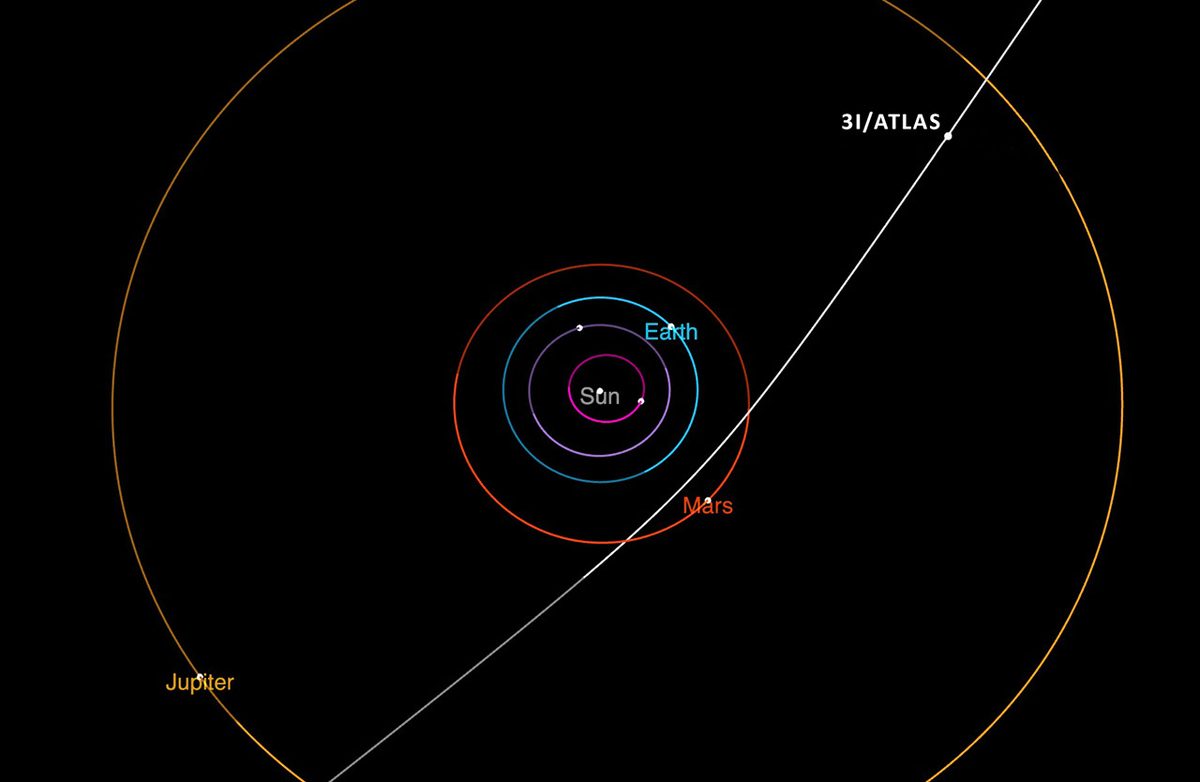
Astronomers determined the comet was interstellar from its high velocity and its trajectory.[1] It was on a hyperbolic path, which means it was moving too fast to be bound by the Sun's gravity and never followed a closed orbit around the Sun.[1] NASA says the comet formed in another star system and was somehow ejected into interstellar space, where it drifted for millions or even billions of years.[1] It approached from the general direction of the constellation Sagittarius, where the center of the Milky Way lies.[1]
A comet, not an asteroid
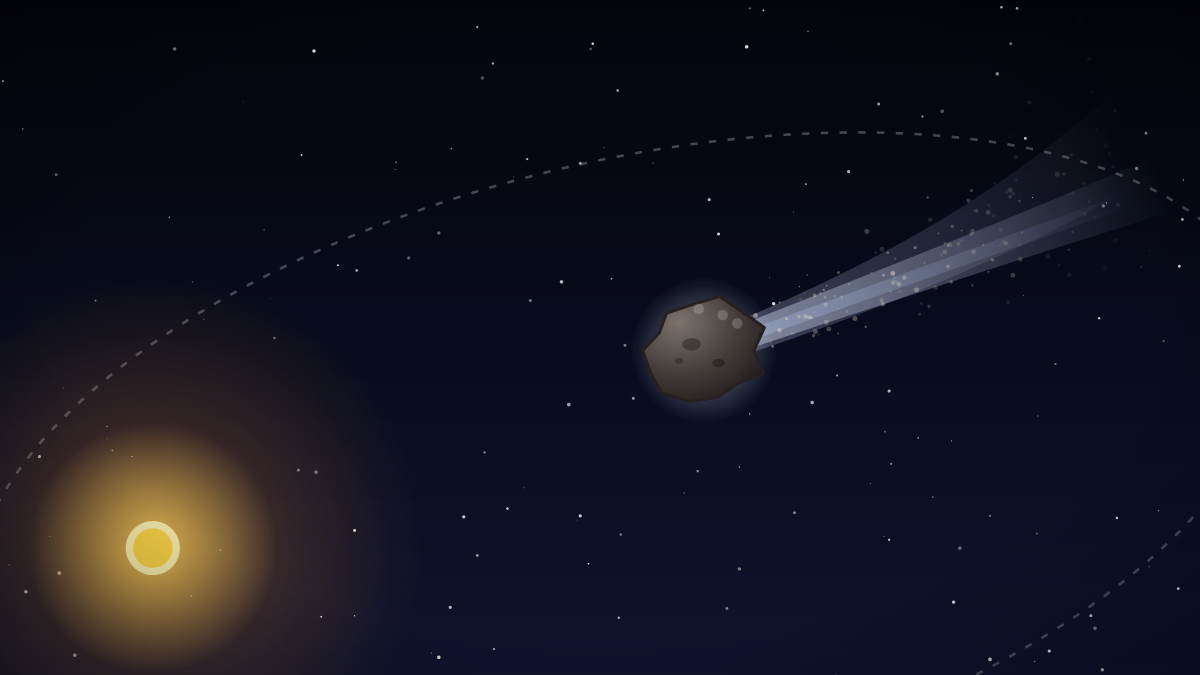
Astronomers saw that 3I/ATLAS was active, meaning it had an icy nucleus and a coma, the bright cloud of gas and dust around a comet that grows as it nears the Sun.[1] NASA says its characteristics, color, speed and direction are all consistent with what is expected from a comet.[1]
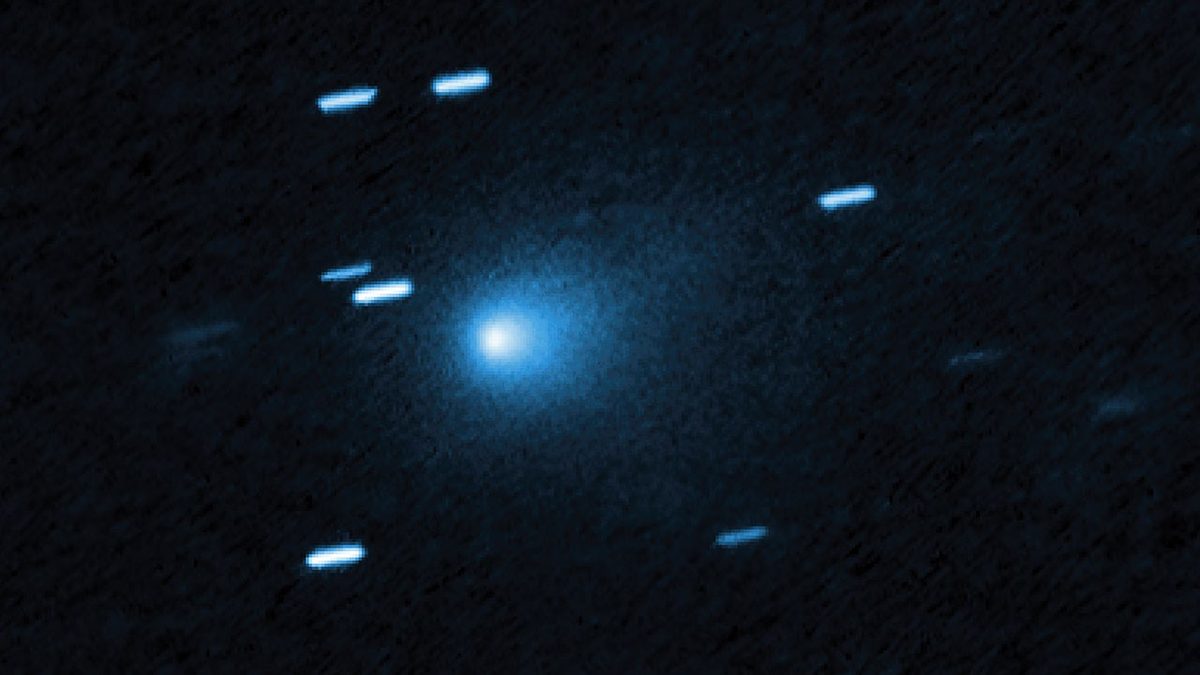
Hubble's July 21, 2025 image, taken when the comet was 277 million miles from Earth, showed a teardrop-shaped cocoon of dust coming off the solid, icy nucleus.[2] The nucleus itself is too small to see directly. From Hubble observations on August 20, 2025, astronomers estimated its diameter at no less than 1,400 feet (440 meters) and no more than 3.5 miles (5.6 kilometers), and NASA says they do not know exactly how big it is.[1]
Closest to the Sun, farthest from danger
The comet came closest to the Sun, called perihelion, on October 30, 2025, at about 130 million miles (210 million kilometers), or 1.4 astronomical units, just outside the orbit of Mars.[1] Earth was on the opposite side of the Sun at the time.[1] Pulled by the Sun's gravity, the comet sped up from about 137,000 miles per hour to about 153,000, and it slowed again on the way out, leaving at the same speed it had arrived.[1] NASA says its path nudges from gas venting were small and consistent with a normal comet.[1]
On December 19, 2025, the comet was about 1.8 astronomical units (about 170 million miles) from Earth, and NASA says it came no closer than that, so there was no danger to our planet.[1]
A fleet of observers
NASA lists a long set of missions that studied the comet: Hubble, Webb, Lucy, Perseverance, MAVEN, Mars Reconnaissance Orbiter, Parker Solar Probe, Psyche, PUNCH, SOHO, SPHEREx and STEREO.[1] Because the comet passed near Mars in early October 2025, spacecraft there got a close look. The HiRISE camera on the Mars Reconnaissance Orbiter imaged it on October 2 from about 19 million miles (30 million kilometers) away.[3] Perseverance used its Mastcam to photograph the comet on October 4, and instruments on MAVEN showed the halo of gas and dust around it.[4]
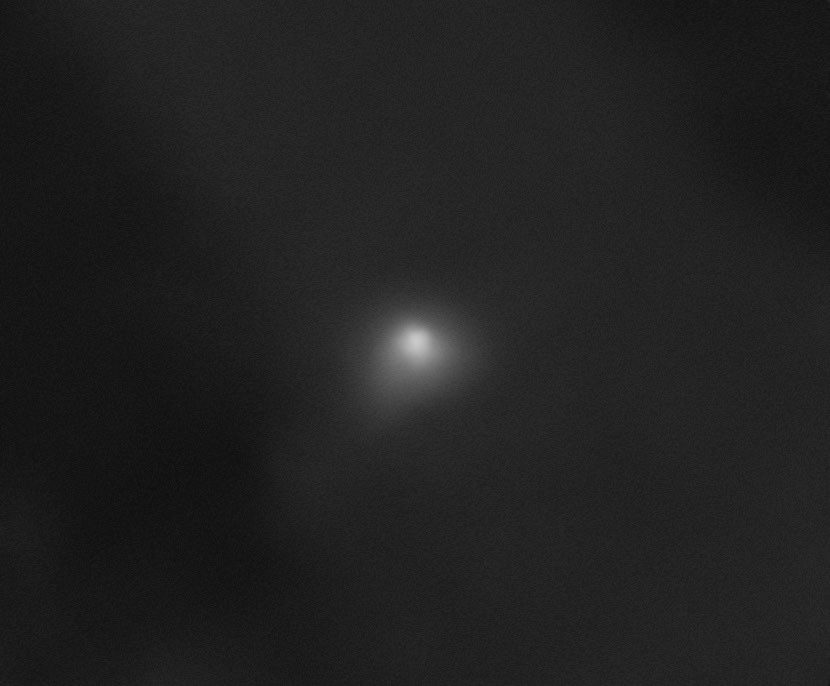
Later, NASA's Europa Clipper watched the comet for seven hours on November 6, 2025, from about 102 million miles away.[4] In December 2025, SPHEREx observations showed infrared light from the dust, water, organic molecules and carbon dioxide in the comet's coma.[4]
Why it matters
NASA says 3I/ATLAS is scientifically important because its differences from the comets of our own solar system may give insight into the composition of other solar systems.[1] Before it, the only known interstellar objects were 'Oumuamua, discovered in 2017, and 2I/Borisov, discovered in 2019.[1]
Gone, but not forgotten
The comet could be seen even with a small telescope in the pre-dawn sky until spring 2026.[1] NASA says it has since continued its journey into interstellar space, never to be seen again.[1]
This article relies on NASA's own pages, last updated May 28, 2026. Distances and speeds are as published by NASA. Photographs and diagrams credited to NASA are used under the NASA Images and Media Usage Guidelines; NASA does not endorse this site.[5]
Sources5tap to view
- NASA Science. Comet 3I/ATLAS Facts and FAQs. Updated May 28, 2026. Accessed October 23, 2026.
- NASA Science. Comet 3I/ATLAS (Hubble image, July 21, 2025). Accessed October 23, 2026.
- NASA Science. MRO HiRISE images 3I/ATLAS. Accessed October 23, 2026.
- NASA Science. Comet 3I/ATLAS Image Gallery. Updated May 28, 2026. Accessed October 23, 2026.
- NASA. NASA Images and Media Usage Guidelines. Accessed October 23, 2026.