Sunlight Takes Thousands of Years or More to Escape the Sun, Then 8 Minutes to Reach Earth
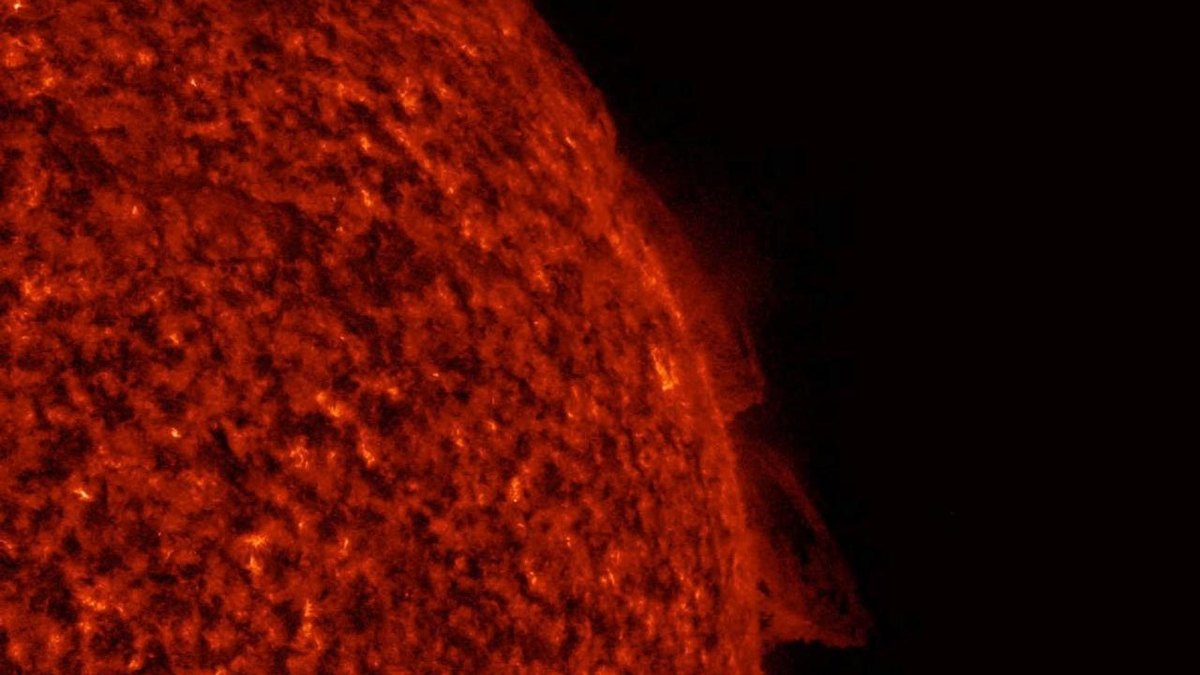
- The final trip from the Sun to Earth takes roughly eight minutes.
- Inside the Sun, light is absorbed and re-emitted over and over in a random walk, so the trip from the core to the surface takes far longer.
- Published estimates range from about 4,000 years to hundreds of thousands or millions of years, because the answer depends on an uncertain step size.
Two very different trips
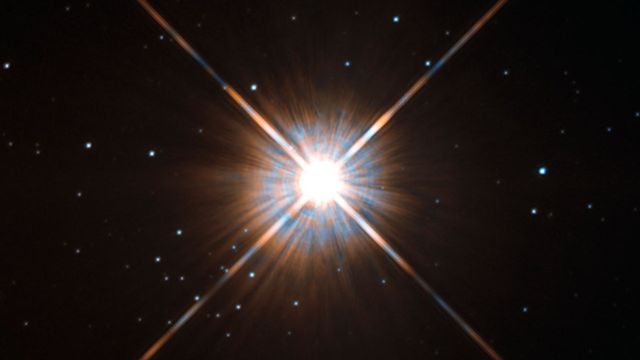
Light from the Sun reaches Earth in roughly eight minutes.[1] That figure covers only the last stretch of the journey, from the Sun’s surface to Earth. The energy in that light was made in the Sun’s core, and getting from the core to the surface is a far slower trip.[1]
A random walk
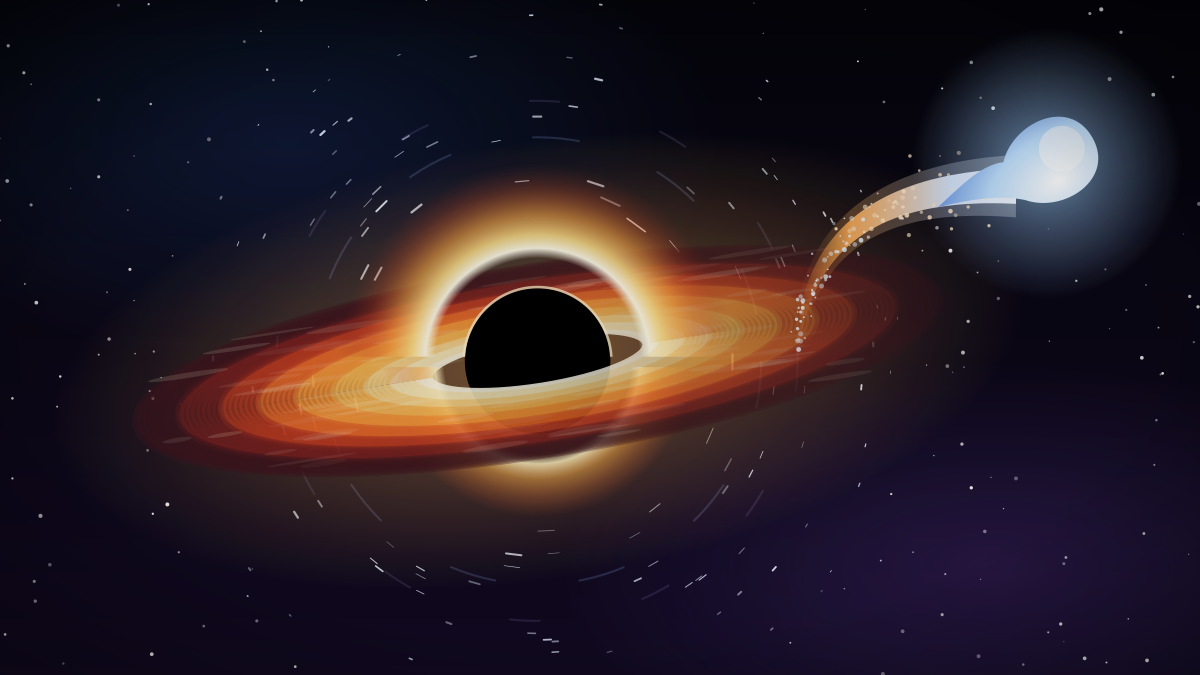
Inside the Sun, matter is so dense that a photon (a particle of light) cannot travel far before it bumps into something, mainly electrons. It then heads off in a new, random direction. A path built from many such steps is called a random walk. Astronomers refer to the question of how long it takes photons to get from the center of the Sun to its surface as the Random Walk Problem, and NASA says it helps explain why the Sun has a radiative zone between its core and surface.[2]
A random walk is slow because most steps cancel each other out. A walk with 10 undirected steps typically ends up only about the square root of that, a bit over 3 steps, from where it started. Put the other way, covering a straight-line distance of 10 steps takes an average of about 10 squared, or 100, random steps.[1]
How the estimate works
The Sun’s radius is about 700,000 kilometers. The answer depends on how far a photon travels between collisions. Scientists estimate that distance at somewhere between 0.1 millimeter and 1 centimeter.[1]
- With a step of 1 centimeter and roughly 5 times 10 to the 21st power steps, NASA scientist Sten Odenwald estimated about 4,000 years.[1]
- With a step of 0.1 millimeter, a National Geographic calculation gave more than half a million years.[1]
- Some textbooks quote hundreds of thousands of years or even several million years, depending on the step size they assume.[1]
Why the answers disagree
Nobody can send a probe into the Sun’s core, so the step size is calculated from models rather than measured. The density inside the Sun is not constant, and steps are longer in the outer half, where the gas is thinner.[1] Odenwald called his own calculation very approximate and noted that a step size three times smaller would make the trip about ten times longer.[1] The disagreement is therefore real: the answer is anywhere from thousands of years to millions, and a single exact figure should be treated with caution.
A note on wording
Photons are massless, so describing them as individuals walking through the Sun is a figure of speech.[1]
Sources2tap to view
- National Geographic. Sunshine’s crazy, sloppy path to you. Accessed October 15, 2026.
- NASA Science. HBY Math 9: The Random Walk Problem. Accessed October 15, 2026.
Estimates of the core-to-surface time differ by factors of a hundred or more because the average step size between collisions is uncertain. The National Geographic article reports the NASA estimate of about 4,000 years and its own calculation of more than half a million years; those figures are cited as reported. The NASA page opened only names the problem and does not give numbers. The 10-step example in the text is an illustration of the squaring rule from the article. Publication dates were not shown on the pages.