Proxima Centauri, the Sun's Closest Neighbor, Is Small, Faint and Fiery
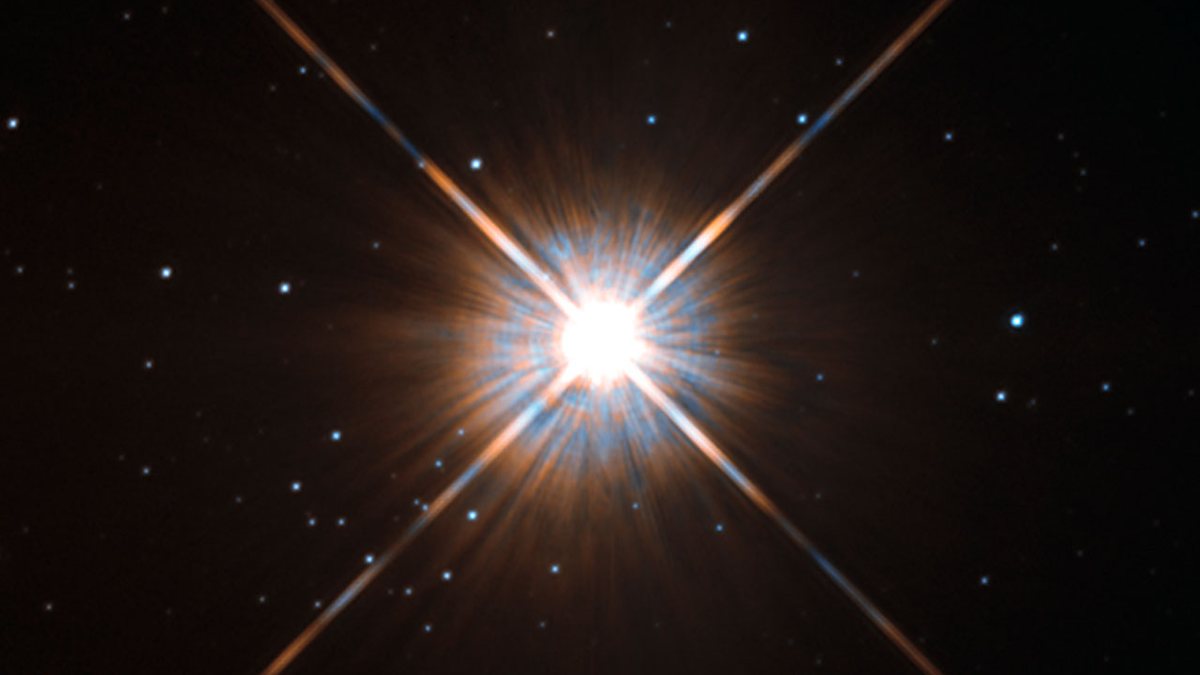
- Proxima Centauri lies about 4.2 light-years away but is invisible to the naked eye.
- It is a flaring red dwarf with about one-eighth the Sun's mass.
- Proxima b is in the habitable zone, but intense radiation makes its habitability uncertain.
Nearest, but not easy to spot
Proxima Centauri sits about 4.2 light-years from the Sun, making it the closest star to the solar system.[2][5] It is a red dwarf, a small, dim, low-mass star with about one-eighth of the Sun's mass.[1][2] Its brightness is so low that it cannot be seen with the unaided eye. EarthSky lists its magnitude as about +11 and places it in the constellation Centaurus, best observed from the Southern Hemisphere.[2]
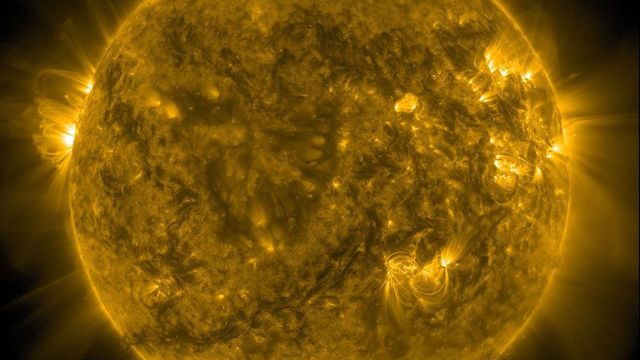
Despite its quiet looks, Proxima is a flare star. In 2021, astronomers saw a burst of radiation from it that was 100 times more powerful than any flare seen from the Sun.[2] ESA/Hubble adds that it should remain on the main sequence for another four trillion years, some 300 times the current age of the universe.[1]
It is also part of the Alpha Centauri system, which ESA/Hubble describes as a triple star system, with Alpha Centauri A and B as its other members.[1] EarthSky points out that some scientists question whether Proxima is actually bound by gravity to the other two.[2]
A planet next door
In August 2016, a team announced Proxima b in the journal Nature. It was found by the radial velocity method, which detects a star's tiny wobble; in this case the star's motion changed by only about 5 kilometers per hour.[3] The planet has a minimum mass of 1.3 Earths and circles its star every 11.2 days.[3][4] Eos adds that its orbit is only about 5 percent of the Earth-Sun distance.[4] EarthSky lists three confirmed planets: Proxima b (2016), Proxima c (2020, with an orbit of 1,907 days) and Proxima d (2022, orbiting in five days).[2] Britannica notes that they are the nearest known planets beyond the solar system.[5]
Is it habitable?
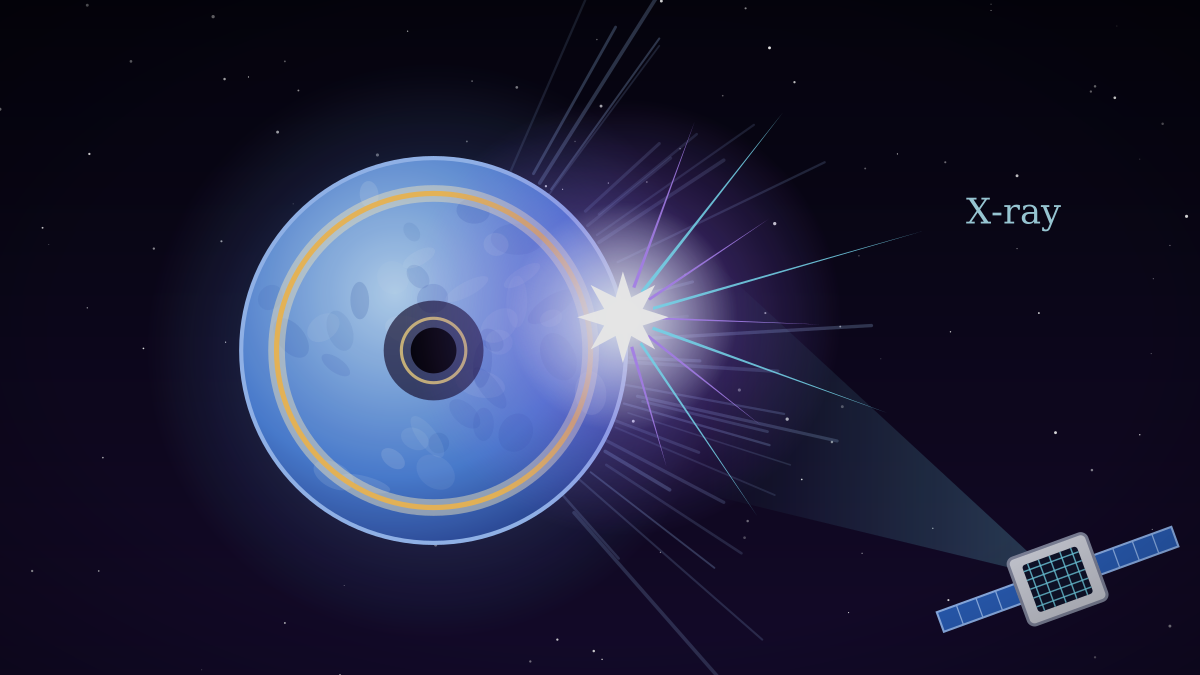
Proxima b lies in the habitable zone, where liquid water could in theory exist on a surface. Eos relays a researcher's view that "temperate zone" is the better term, since temperature alone allows water but not necessarily life.[4] The French research agency CNRS says the planet received about 250 times more X-rays and 15 times more extreme ultraviolet light than Earth over its history, while Eos gives 100 to 400 times the X-ray dose.[3][4] Both sources say it could be tidally locked, with one side permanently dark.[3][4] The announcement team said the world cannot be considered an Earth twin, since its formation and history were different.[3] Whether it kept any water or atmosphere depends on its formation and flare history, which remain uncertain.[3][4]
Researcher Ansgar Reiners, quoted by Eos, described it as "the closest planet outside our solar system that will ever be found."[4]
The discovery paper, led by Guillem Anglada-Escudé, reports a planet with a minimum mass of about 1.3 Earth masses and an orbital period of roughly 11.2 days at about 0.05 astronomical units from the star, which lies 1.295 parsecs away.[6] ESO's announcement of August 24, 2016, links the result to the Pale Red Dot campaign and gives the orbital distance as about 7 million kilometers. It describes the star's regular wobble of around 5 kilometers per hour, comparable to walking pace, repeating every 11.2 days, and says the paper appeared in Nature on August 25, 2016.[7]
Sources7tap to view
- ESA/Hubble. New shot of Proxima Centauri, our nearest neighbour. Accessed October 5, 2026.
- EarthSky. Proxima Centauri: Our sun's nearest neighbor. Accessed October 5, 2026.
- CNRS. Closest ever exoplanet potentially habitable. Accessed October 5, 2026.
- Eos (AGU). Closest-ever terrestrial exoplanet found, habitability debated. Accessed October 5, 2026.
- Encyclopaedia Britannica. Proxima Centauri. Last modified August 29, 2026. Accessed October 5, 2026.
- Nature (Anglada-Escudé et al.). A terrestrial planet candidate in a temperate orbit around Proxima Centauri. August 2016. Accessed October 5, 2026.
- ESO. ESO press release eso1629 on the discovery of Proxima b. August 24, 2016. Accessed October 5, 2026.
Sources differ on the radiation Proxima b receives: CNRS cites about 250 times Earth's X-ray dose and 15 times its extreme UV, while Eos cites 100 to 400 times the X-ray dose. Publication of the 2016 discovery is dated August 24 (Eos) or August 25 (CNRS). Scientists also disagree on whether Proxima is gravitationally bound to Alpha Centauri A and B. The Reiners quote is as reported by Eos.