It Rains Iron on WASP-76b, a Planet Where Metal Vapor Falls From the Sky
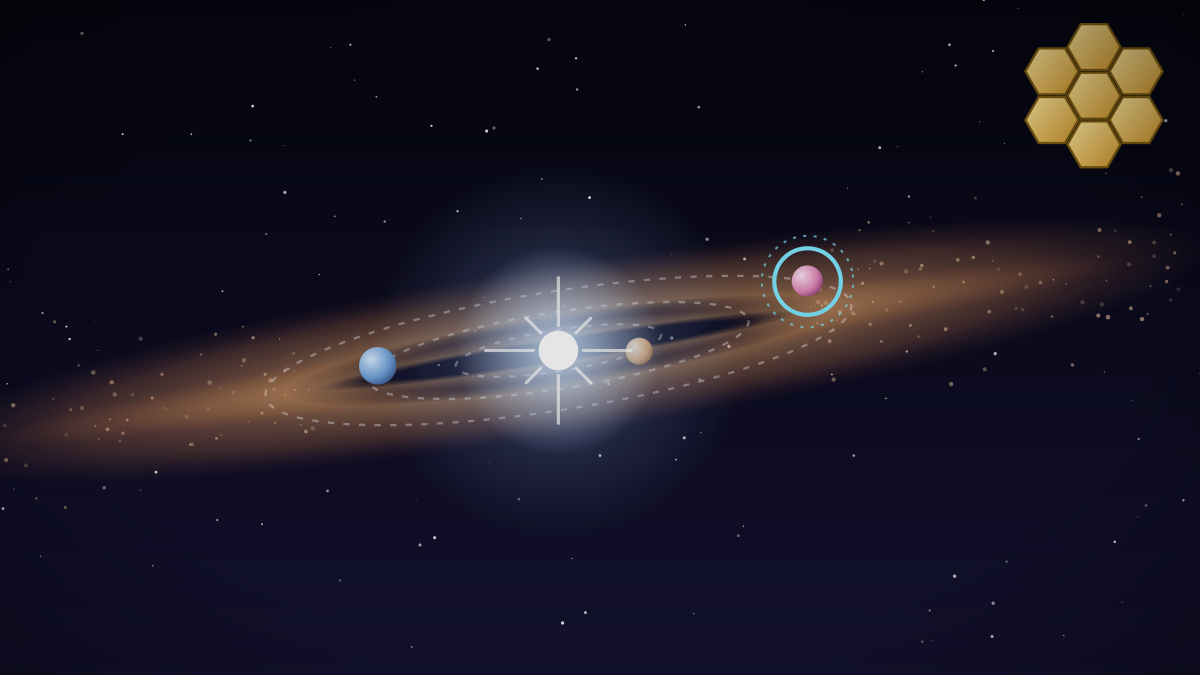
- WASP-76b is a hot Jupiter about 640 light-years away that orbits its star in less than two Earth days.
- Iron vapor was detected at the evening edge of the planet but not at the morning edge, which indicates it condenses on the nightside.
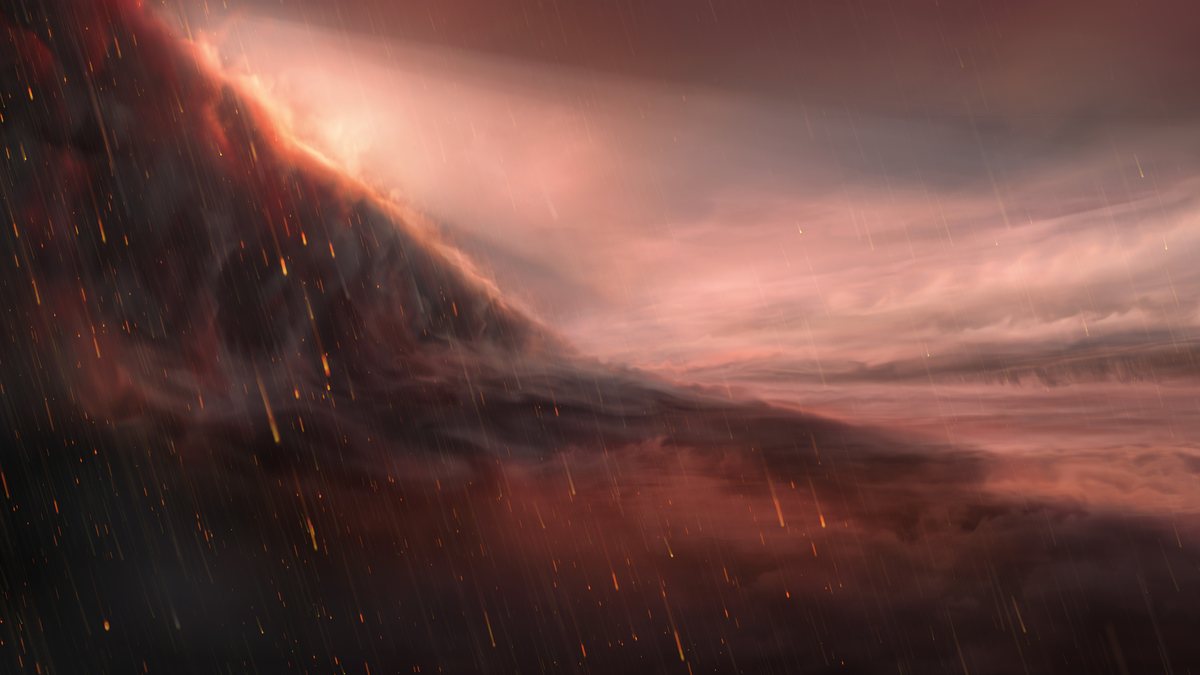
- The iron rain is inferred from the spectrum, not photographed; images of it are artist’s concepts.
A planet hot enough to boil iron
WASP-76b is a hot Jupiter, a gas giant that orbits extremely close to its star. It lies about 640 light-years from Earth in the constellation Pisces, and it was announced in 2013.[1][2] The planet circles its star in less than two Earth days, and it is tidally locked, so the same face always points toward the star, much as the same side of the Moon faces Earth.[2]
The dayside is among the hottest places astronomers have measured on a planet. Temperatures there reach about 2,400 degrees Celsius (about 4,350 degrees Fahrenheit), enough to vaporize metals such as iron.[2] The planet receives thousands of times more radiation from its star than Earth receives from the Sun, and sits nearly ten times closer to its star than Mercury sits to the Sun.[1]
What was observed
The finding came from the first science observations of ESPRESSO, a spectrograph on the European Southern Observatory’s Very Large Telescope in Chile’s Atacama Desert.[1][2] Observations began in September 2018.[2] A spectrograph splits starlight into its colors, and gases between the telescope and the star leave dark absorption lines. As the planet crosses in front of its star, light that passes through the planet’s edge carries the fingerprints of whatever gases are there.
The team, led by David Ehrenreich of the University of Geneva, found the signature of iron vapor at the boundary between the day and night sides, the evening edge of the planet.[1][2] Surprisingly, the iron was not seen on the opposite edge, the morning side.[2] The result was published in Nature on 11 March 2020 in a paper titled “Nightside condensation of iron in an ultra-hot giant exoplanet.”[2]
Why the missing signal means rain
Winds are thought to carry hot gas from the dayside toward the nightside. The nightside is cooler, about 1,500 degrees Celsius (about 2,730 degrees Fahrenheit), which is cool enough for iron vapor to condense.[2] The explanation is that iron vapor reaches the nightside, condenses, so little iron vapor is left by the time the gas circles around to the morning edge.[1][2] The iron signal on the trailing edge was also shifted toward blue by about 11 kilometers per second, which the authors attribute to rotation and winds carrying gas from the dayside.[2]
What is not known
The rain is an inference. No instrument has watched droplets fall, and the pictures that accompany the news stories are artist’s concepts.[2] The result also comes from a single study, so details such as how the iron clouds are arranged remain open. The distance estimate has changed as well: an older estimate was 390 light-years, and the newer figure of about 640 light-years comes from more recent data.[2]
Why it matters
WASP-76b shows how varied planets can be. A Jupiter-like world in a two-day orbit has weather unlike anything in the Solar System, with a vapor-and-droplet cycle based on metal rather than water. Measuring where each chemical element is present, and where it disappears, is one of the main ways astronomers study the atmospheres of planets too far away to image directly.
Sources2tap to view
- Astronomy. Astronomers find an exoplanet where iron rains from the sky. 2020-03-11. Accessed October 15, 2026.
- EarthSky. WASP-76b exoplanet iron rain ESPRESSO. 2020-03-11. Accessed October 15, 2026.
The two news sources agree on the main result. Temperatures are given as 2,400 degrees Celsius by both, written as 4,300 degrees Fahrenheit in one and 4,350 in the other. The comparison with Mercury and the nightside temperature each come from one source. The original Nature paper was not opened; its title and date are as reported by EarthSky.