How Many Planets Have Been Found Beyond the Solar System?
- The confirmed count passed 6,000 and rose to 6,445 in the NASA Exoplanet Archive on 8 October 2026.
- Transit detection accounts for roughly 4,800 of the confirmed planets and radial velocity about 1,200.
- The number grows with each archive update, so any figure is valid only for its date.
The count and its date
NASA states that more than 6,000 exoplanets, planets outside the solar system, have been confirmed, with thousands more candidates awaiting confirmation. The same page notes that billions are believed to exist.[1] A more exact figure comes from the NASA Exoplanet Archive, which announced on 8 October 2026 that new additions brought its total confirmed planet count to 6,445. Earlier announcements gave 6,366 on 11 September 2026 and 6,147 on 12 March 2026.[3] The archive's table of counts lists the same total, 6,445, although that page does not state the date of the count.[2]
The figure is not fixed. It rises whenever new planets are confirmed, so a number quoted today will be out of date later.
From the first Sun-like star to today
The first exoplanet found around a Sun-like star, 51 Pegasi b, was identified in October 1995, and 2025 marked 30 years of discoveries.[1] That planet orbits its star in about four days and was found with the radial velocity method.[4] Since then, new detection methods, spacecraft such as the James Webb Space Telescope, ground-based observatories and even citizen scientists with backyard telescopes have added to the total.[1]
How planets are found
Several methods are in use.[4]
- Radial velocity: detects a star's motion toward and away from Earth through shifts in its light. It launched what NASA calls the classical period and found many large hot Jupiters.
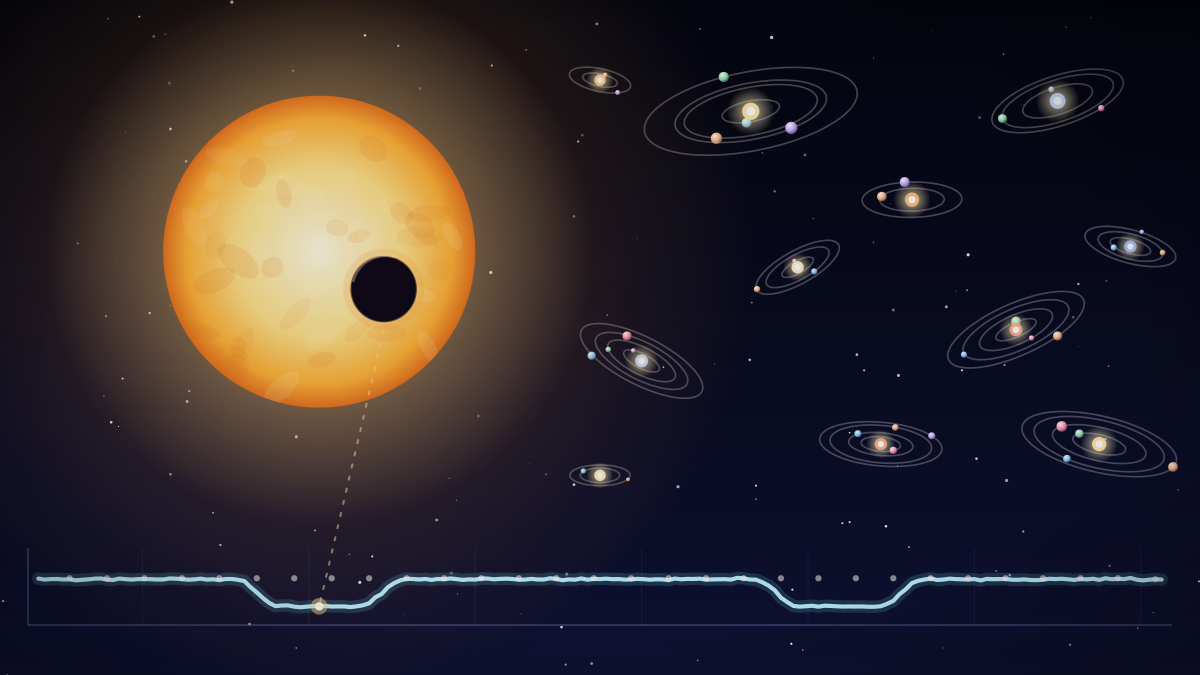
- Transits: detect tiny dips in a star's light as a planet crosses in front of it. NASA's Kepler watched about 150,000 stars for four years, and TESS uses the same technique.
- Gravitational microlensing: a foreground star's gravity magnifies a background star, and a planet shows as a second, smaller spike.
- Direct imaging: captures light from planets directly, mainly young, hot giants.
The archive breaks down the confirmed planets by discovery method, noting that methods can overlap: transit 4,781, radial velocity 1,203, microlensing 292, imaging 97, transit timing variations 29, eclipse timing variations 17, orbital brightness modulations 9, pulsar timing variations 8, astrometry 6, pulsation timing variations 2 and disk kinematics 1.[2] Transit therefore accounts for roughly three quarters of the total. NASA describes the transit approach, led by Kepler, as the start of the modern era of planet hunting, following the classical era of radial velocity discoveries.[4] Both eras remain visible in the table: radial velocity is still the second most productive method, well ahead of microlensing and imaging.[2]
Reading planets once they are found
Detection is only a first step. In transit spectroscopy, starlight passing through a planet's atmosphere is analyzed to identify molecules. Hubble detected helium and water vapor this way, and the James Webb Space Telescope is providing more detailed atmospheric profiles.[4] Direct imaging has produced pictures such as Webb's image of HIP 65426 b and a Keck Observatory series showing four planets orbiting HR 8799 over seven years.[4] Coronagraphs, which block starlight inside a telescope, and starshades, separate spacecraft flown far from the telescope, are technologies meant to make such images easier, though NASA does not describe them as discovery methods with results yet.[4] Citizen scientists contribute as well: the Exoplanet Watch project tracks planets as they pass in front of stars.[1]
What kinds of planets
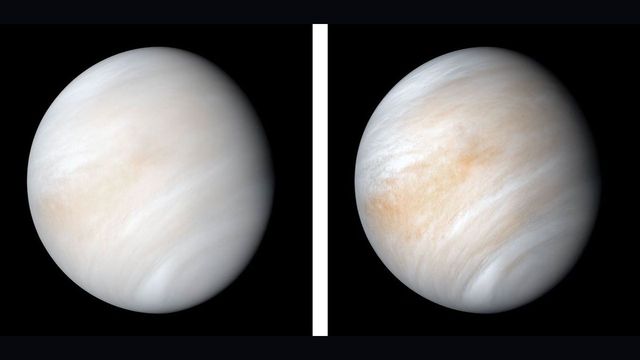
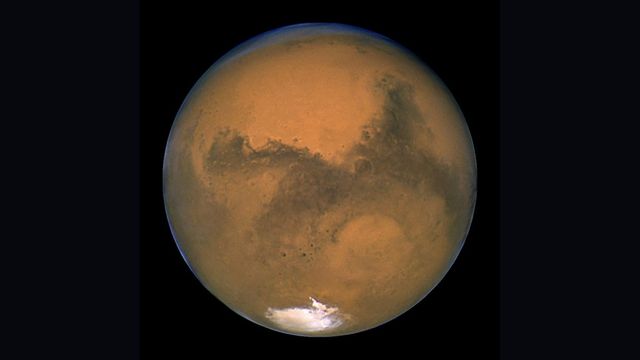
NASA groups exoplanets into gas giants, Neptune-like planets, super-Earths and terrestrial planets, with subcategories such as mini-Neptunes. Compositions range from rocky, like Earth and Venus, to gas-rich, like Jupiter and Saturn, and the catalog includes lava worlds and planets with the density of Styrofoam.[1] The closest known exoplanet, Proxima Centauri b, is about 4 light-years away.[1] Kepler alone has produced more than 2,600 confirmed planets.[5]
How many might exist
Statistics based on Kepler suggest there are more planets than stars in the galaxy, which would mean more than a trillion planets.[4] Confirmed planets are therefore a tiny fraction of the total. NASA expects the Nancy Grace Roman Space Telescope to discover 100,000 more exoplanets.[1] Roman is also planned to use the microlensing method.[4]
Summary of figures
- Confirmed planets, 8 October 2026: 6,445 (NASA Exoplanet Archive).[3]
- Confirmed planets, 11 September 2026: 6,366.[3]
- Confirmed planets, 12 March 2026: 6,147.[3]
- Planets found by transit: 4,781.[2]
- Planets found by radial velocity: 1,203.[2]
Sources5tap to view
- NASA Science. Exoplanets. 2026-09-30. Accessed October 7, 2026.
- NASA Exoplanet Archive. Exoplanet and Candidate Statistics (counts by discovery method). 2026-10-08. Accessed October 8, 2026.
- NASA Exoplanet Archive. Exoplanet Archive News. 2026-10-08. Accessed October 8, 2026.
- NASA Science. How We Find and Characterize Exoplanets. 2026-10-07. Accessed October 7, 2026.
- NASA Science. Kepler / K2. 2026-10-08. Accessed October 8, 2026.
Counts differ by source and date: NASA's exoplanets page says more than 6,000 (and mentions 6,300+ elsewhere on the page), the archive news gave 6,445 on 8 October 2026 (6,366 on 11 September 2026), and the archive counts table shows 6,445 without a date. Per-method counts overlap, so they sum to more than the total. The Kepler-based estimate of more than a trillion planets is a statistical projection stated by NASA, not a count. The roughly three-quarters share for transit is the writer's arithmetic from the archive figures. Undated pages carry the retrieval date.