What Causes Meteor Showers? Comet Dust Meets Earth's Atmosphere
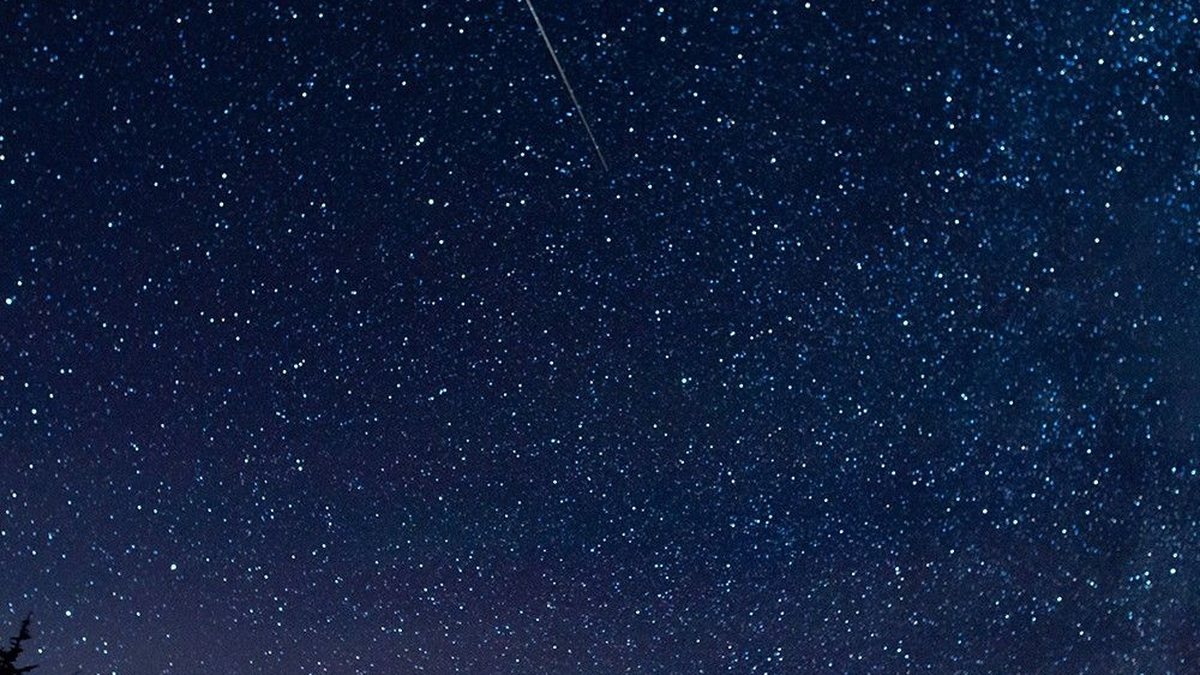
- Showers occur when Earth crosses a comet's debris trail, and in a few cases an asteroid's.
- Most of the debris is between the size of a sand grain and a pea.
- Showers are named for the constellation where the meteors seem to originate.
Dust left behind by comets
Streaks of light across the sky are caused by dust and sand-sized rocks burning up in the upper atmosphere, according to the Planetary Society.[6] A meteor shower is a spike in those streaks. NASA explains that showers occur annually or at regular intervals as Earth passes through a trail of dusty debris left by a comet and, in a few cases, by asteroids.[1] Most of the debris is between the size of a grain of sand and a pea, and it burns up before reaching the ground.[1]
The vocabulary is worth knowing. Meteoroids are the rocks while still in space, meteors are the glowing streaks they make in the atmosphere, and meteorites are the fragments that survive to the ground.[2] Meteorites typically range from the size of a pebble to that of a fist.[3] Fireballs are meteors brighter than the planet Venus, and NASA runs an All Sky Fireball Network to monitor them.[2]
A worked example: the Perseids
The Perseids come from Comet Swift-Tuttle, which has a nucleus about 16 miles (26 kilometers) across.[5] As the comet orbits the Sun, it releases dust that gradually spreads along its path, and each year Earth's passage through those trails produces the visible meteors.[5] The link was identified by astronomer Giovanni Schiaparelli in 1865.[5] The shower peaks in mid-August.[4] The comet takes 133 years to circle the Sun, and its last closest approach came in 1992; its next closest approach is expected in 2125.[5]
That repetition explains why showers are dependable calendar events. The Planetary Society notes that they recur yearly because Earth's orbit carries it through the same debris fields again and again.[6]
Other showers have their own parents. NASA lists the Leonids as linked to comet Tempel-Tuttle, the Aquariids and Orionids to Halley's Comet, and the Taurids to comet Encke.[1]
Why they seem to come from one spot
Showers are usually named after a star or constellation near that point.[1] The Perseids appear to originate in the constellation Perseus.[4] They are also fast: NASA gives a speed of 37 miles (59 kilometers) per second.[4] Larger particles of cometary material can produce fireballs.[4] Speeds vary by object: NASA notes that the Chelyabinsk meteoroid traveled at over 18 kilometers per second.[3]
How many to expect
Rates depend on the shower. NASA says several meteors per hour can usually be seen on any clear night, while the Geminids peak at about 150 per hour and the Leonids at roughly 15 per hour.[3] For the Perseids, NASA cites about 50 to 100 per hour from dark skies at peak, with about 25 per hour under typical conditions.[4] Altogether, about 48.5 tons (44 tonnes) of meteoritic material falls on Earth each day.[2]
Sources6tap to view
- NASA Science. Meteor Showers. 2026-09-21. Accessed October 5, 2026.
- NASA Science. Meteors and Meteorites. 2026-09-21. Accessed October 5, 2026.
- NASA Science. Meteors and Meteorites: Facts. 2025-02-14. Accessed October 5, 2026.
- NASA Science. Perseids. 2026-08-13. Accessed October 5, 2026.
- NASA Science. Comet 109P/Swift-Tuttle. 2024-01-25. Accessed October 5, 2026.
- The Planetary Society. What is a meteor shower?. Accessed October 5, 2026.
Rates are quoted differently by NASA pages (several per hour on any clear night, 25 per hour typical Perseids, 50-100 at a dark-sky peak), reflecting different conditions rather than a conflict. The same NASA site also gives Swift-Tuttle's orbit as 133 years on its Perseids and comet pages, while its Meteors and Meteorites page gives 135 years.