What Is the Milky Way? A Guide to Earth's Home Galaxy
- The Milky Way is a barred spiral galaxy more than 100,000 light-years across.
- Estimates of its star count run from 100 to 400 billion.
- Its central black hole, Sagittarius A*, holds about four million solar masses.
A spiral city of stars
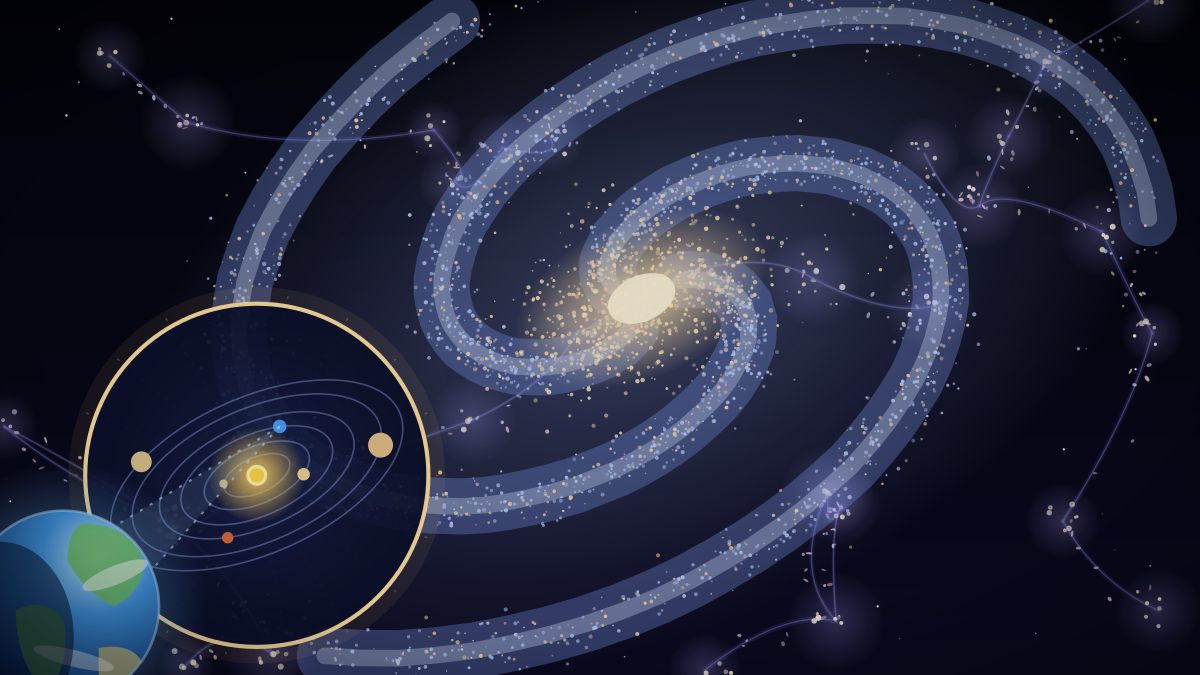
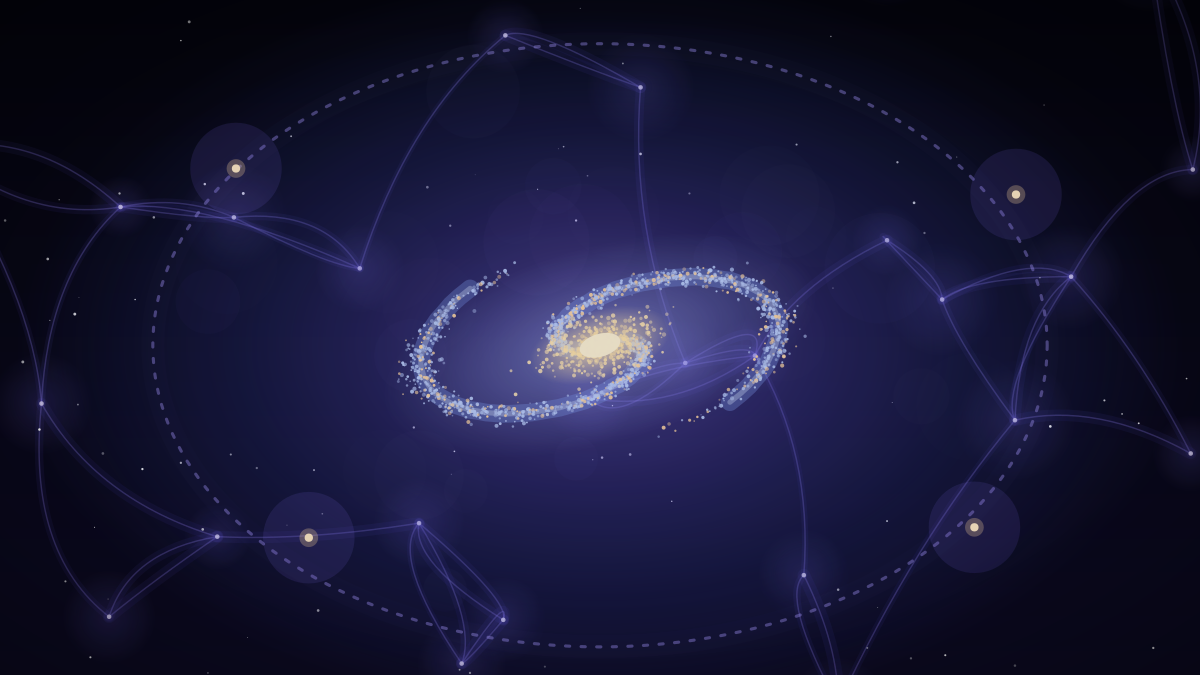
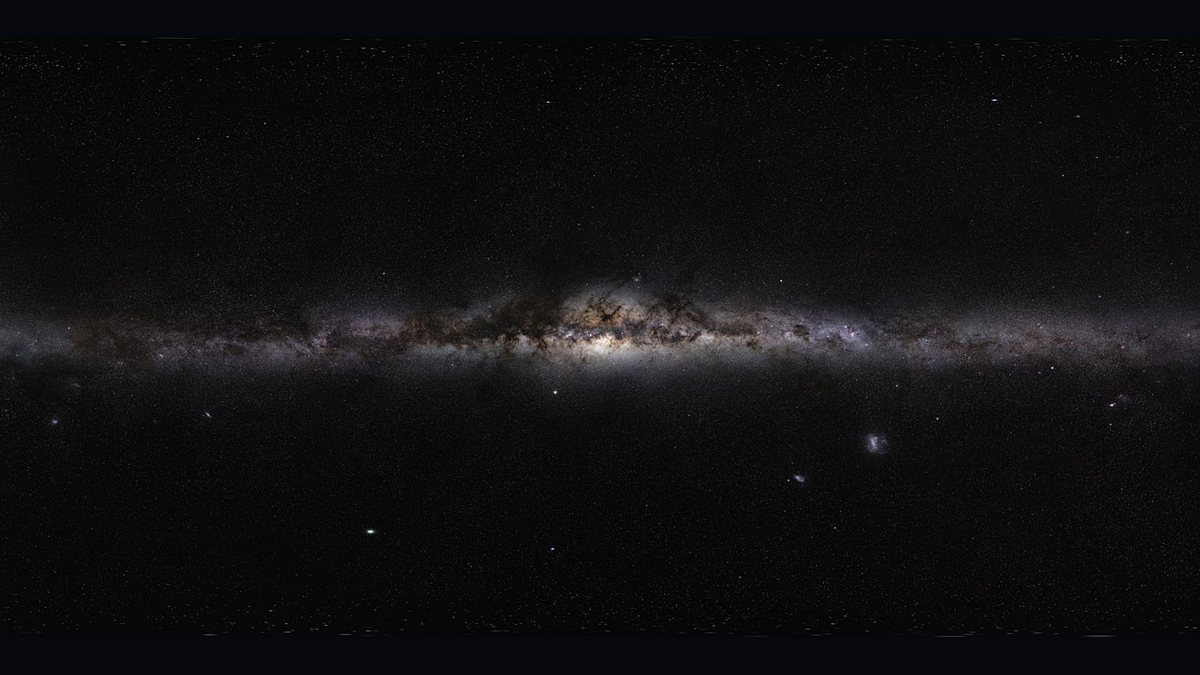
Galaxies are collections of stars, planets, gas and dust bound together by gravity. NASA classes the Milky Way as a spiral galaxy with a disk spanning more than 100,000 light-years, within a Local Group of more than 50 galaxies that is itself part of the Laniakea supercluster.[1] For scale, NASA says the largest galaxies hold trillions of stars and stretch over a million light-years, while the smallest have only a few thousand stars.[1] Space.com's profile adds that it is a barred spiral, with a peanut-shaped central bulge about 10,000 light-years across and four spiral arms: two major (Perseus and Scutum-Centaurus) and two minor (Sagittarius and the Local Arm).[2]
The Solar System sits roughly halfway out from the center, along one of the arms.[1] Space.com places it about 26,000 light-years from the galactic center, near the edge of the Local Arm.[2]
How many stars?
There is no precise head count. Space.com's explainer quotes an ESA scientist saying the current estimate lies between 100 and 400 billion stars.[3] Astronomers get there by measuring the galaxy's mass from its rotation and then estimating how much of that mass is stars rather than dark matter; the article puts dark matter at roughly 90 percent of the total and stars at around 3 percent. The hardest part is faint red dwarfs, which are difficult to measure and to tell apart from brown dwarfs.[3] Even ESA's Gaia mission, which has mapped 1.7 billion stars, struggles with the faintest objects.[3] The other Space.com profile quotes a single figure of about 200 billion stars, which sits inside that range.[2]
A black hole and a young bar
At the center sits Sagittarius A*, a supermassive black hole. The European Southern Observatory describes it as about 27,000 light-years from Earth and roughly four million times the mass of the Sun, in the context of the first image of it from the Event Horizon Telescope, released in 2022.[4] Space.com gives the mass as 4.3 million Suns.[2]
The central bar of stars turns out to be a surprise. A 2023 Science News report on a study using data from ESA's Gaia telescope found that a burst of star formation in the galactic center ended roughly 3 billion years ago, which the researchers read as the bar reaching maturity. That is late in cosmic terms, and it conflicts with computer simulations that usually form bars early.[5]
Going around the center
The whole disk rotates. NASA gives about 240 million years for the Solar System to complete one orbit of the galaxy.[1] Space.com's profile offers two values in different places, 230 and 250 million years, which brackets that figure.[2] The age of the galaxy is given there as about 13.6 billion years.[2]
These numbers are good reminders that galactic measurements are made from the inside. Astronomers study the Milky Way from inside it, so the figures above are estimates that surveys continue to refine.
Sources5tap to view
- NASA Science. Facts About Galaxies and the Milky Way. 2026-08-12. Accessed October 5, 2026.
- Space.com. Milky Way galaxy: Everything you need to know about our cosmic neighborhood. 2023-04-18. Accessed October 5, 2026.
- Space.com. How many stars are in the Milky Way?. 2022-02-03. Accessed October 5, 2026.
- European Southern Observatory. Astronomers reveal first image of the black hole at the heart of our galaxy (eso2208). 2022-05-12. Accessed October 5, 2026.
- Science News. A bar of stars at the center of the Milky Way looks surprisingly young. 2023-12-13. Accessed October 5, 2026.
Sources differ on several figures: the star count (100-400 billion in one Space.com piece, about 200 billion in another), the Sun's orbital period (NASA about 240 million years; Space.com gives both 230 and 250 million), the distance to the center (about 26,000 light-years in Space.com, about 27,000 in the ESO release for Sagittarius A*), and the black hole mass (about four million vs 4.3 million Suns). These reflect measurement uncertainty, not a dispute.